Wearable App Development: Weighing the Benefits and Challenges!
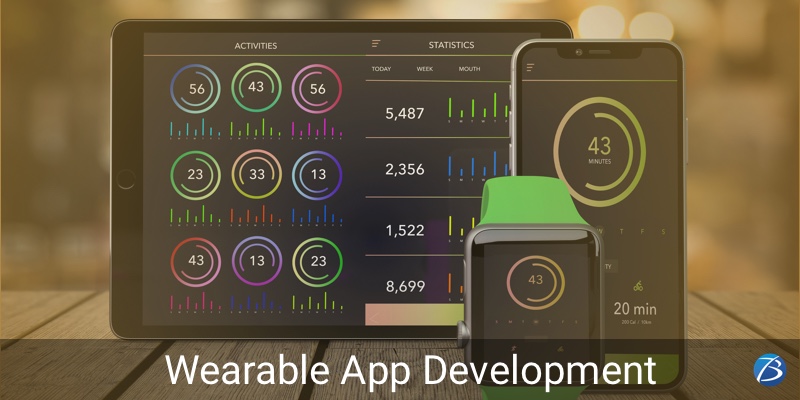

Wearable technology, one of the most ground-breaking innovations of the modern age, has set a novel trend in itself. Some of its popular end-products are Smartwatches, Fitbit, Smartglasses, Hearables, Head-mounted displays, Sports watches, Fitness trackers, and temperature controllers.
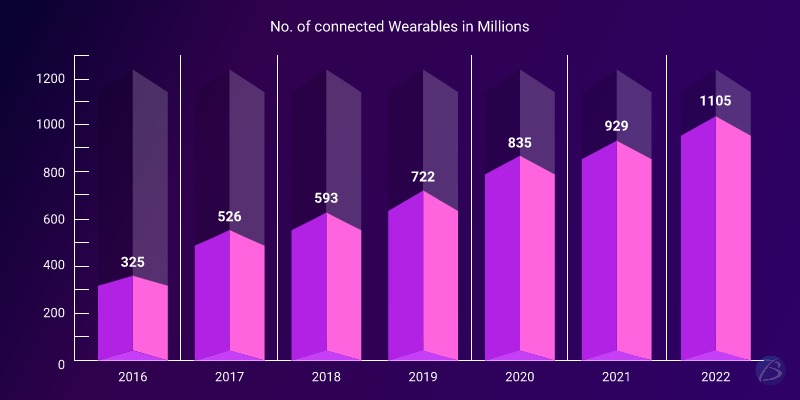
Wearables were primarily used by the high-profile niche category like armed forces, healthcare professionals, intelligence agencies, and specific enterprises. Later, this technology entered the private consumer market. Today, consumers use wearables for a wide range of activities; right from tracking fitness to enhancing gaming experiences. The usage of wearable devices and apps not only makes our lives easier but also elevates business performance across diverse industry verticals. Consequently, wearable app development companies are multiplying every year. As per a report published by the prominent online portal Statista;
“The total number of connected wearable devices around the globe was 325 million in 2016. This number shot up to 835 million in 2020 and is predicted to exceed one billion by 2022.”
No. of connected Wearables in Millions
Statista also observed that amongst wearable devices “smartwatches have been the bestsellers in the past couple of years. Ear-worn hearable devices are also gaining momentum and are expected to dominate the consumer market in the years to come.”
The Wearable technology is capable of crafting game-changers like Smartwatch apps, Google Glass Apps, Smart Band apps, Apple Watch apps, Smarteye Wear Apps, Smart Fit Bands, Virtual Reality Apps, and wearables for Healthcare, Games, Navigation, etc. However, all manufacturers are not able to hit the jackpot as wearable app development and the technology itself involves several challenges. This blog pens down the advantages as well as the roadblocks associated with wearable technology, devices, and apps.
But before we dive deeper, let me introduce you to this technology!
Wearables: An Overview
Wearables are electronic devices that can be worn as accessories, implanted in the body of users, or inserted within their clothing. Smart sensors and powerful microchips are embedded inside these devices, which record, analyze, transmit and monitor the user’s biometric data upon their consent. So, the advancement of this technology is directly proportional to the growth of mobile networks, miniaturized microprocessors, and high-speed data transfer, Needless to say, its ability to connect additional devices using Wi-Fi, Bluetooth, or Cellular networks provides an enriching experience to wearable users. So, besides tracking personal data, these devices can also access apps and use the processed information to deliver feedback.
Wearables are considered as one major category of IoT because of the smart life-changing applications that it provides. The only difference is that, unlike most IoT mobile apps, a corresponding wearable app can work independently of a mobile app and this offers more flexibility to users. Yet, many wearable apps can share their load with a companion smartphone app if required.
Benefits of Wearable Apps and Devices
Healthcare Sector
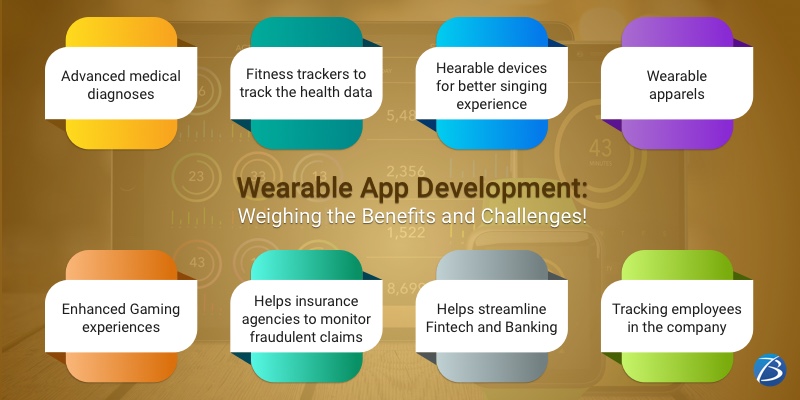
Healthcare Wearables facilitate medical diagnoses, preventive care, treatment decisions, remote monitoring, and high-risk care management. Take a look at some instances.
- The sensors present in smart health watches can detect early signs of the following diseases – Parkinson’s, strokes, fatigues related to cancer, and certain symptoms of Alzheimer’s.
- Body-mounted sensors like Wearable ECG monitors, blood pressure monitors, and Biosensors detect crucial healthcare data such as pulse rate, muscle oxygen saturation, oxygen and glucose levels in the blood, and many more.
Fitness tracking
Fitness trackers measure the number of stairs climbed, the number of steps while walking; keep a track of the user’s heart rate, amount of calories gained; evaluate sleep quality; etc. They also provide feedback and reminders regarding the users’ fitness and health goals. For this reason, these gadgets have become an absolute necessity for modern individuals with super-busy and sedentary lifestyles.
Hearable devices
Hearables refer to wearable devices created for listening to music. These devices are wireless, small-sized, in-ear accessories; and use customized applications for delivering the best results. Samsung Galaxy Earbuds and AirPod by Apple are the leading examples.
Fashion Industry
The fashion industry has also started leveraging the benefits of wearables. Let’s see how?
- Top clothing brands like Levis are developing wearable apparel in the form of suits, pants, and other forms of clothing accessories.
- Wearable jewelry in the form of rings, necklaces, and armbands are being manufactured.
Gaming experiences
The gaming sector is leveraging the most recent technologies like IoT, Virtual Reality, Artificial Intelligence, and wearable technology to architect spectacular gadgets that boost gaming experiences. Some examples are eye-wear that produces real-life graphics, haptic devices that provide real-time tangible feedback to gamers, a wristband called Gameband+Minecraft which is dedicated to gamers.
Insurance agencies
Wearable technology allows insurance providers to access the biometrics of policyholders and other necessary information. This data helps them to prevent fraudulent claims, ensure underwriting accuracy and enhance customer engagement. For instance, Fitbit has entered into a partnership with United Healthcare, and so the users who record their activities in Fitbit devices receive healthcare credits as a reward.
Fintech and Banking
Wearable technology helps banks to interact in a better way with clients and offer improved services. Banks acquire specific client data in real-time and so can provide personalized services to clients. Customers, too benefit by enjoying easy-going services and contactless payments.
Employee tracking
Wearables help employers to track employees when they are not around. Alerts are sent to employees to which they can respond immediately. This way, employers are always connected to their employees, and work efficiency increases as well.
Challenges in Wearable App Development
Wearable technology being in its initial years of development is facing certain stumbling blocks. Take a look!
- As the screen size of wearables is quite small, it becomes tricky for the UI/UX designers to accommodate all the elements and provide an attractive look at the same time.
- Wearable apps involve data transfer between two devices and so chances of data breaches by a third-party are quite likely. So it is very important that the wearable app development company businesses opt should be able to handle the security of wearable applications efficiently.
- Users tend to shun devices or apps that drain too much battery and so one must take care of this aspect to remain competitive. But, wearable app developers find it extremely challenging to strike the perfect balance between incorporating the best features and making the device/app a battery-saving one.
- Wearables being small devices with limited functions, need to be tethered to a larger device for accessing more features of the application. So, the biggest development constraint is maintaining a decent range between two devices and Bluetooth to ensure that they stay connected.
- Multi-platform support is essential for the success of a wearable app. But, as different coding is needed for each platform, developers need to focus on API and several protocols for creating a custom app that will run consistently across various devices.
- Regular updates introducing new features and bug fixes are needed to stay relevant which is not so easy to achieve in wearable apps.
Are You Interested in Building a Top-Class Website or Mobile App?
Final Thoughts:
Wearable app development is still in a nascent phase and has a long road ahead. This technology is already a trendsetter and further advancements are expected in the near future. The Wearable App Development process does face certain challenges but with time the wearable industry will successfully overcome all hurdles and emerge as one of the most incredible assets of the software industry.
If you have experience in using or developing wearable apps, please share your thoughts in the comments section below. Contact us for further queries about wearable technology.