Architecting a Mobile Conference or Event App: Benefits, Features, and Pricing!

Architecting a Mobile Conference or Event App: Benefits, Features, and Pricing!
event mobile app development
As per a study, 37% of event planners make use of mobile event apps for event-related tasks. This is a sign of the rising demand for mobile conferences or event apps for organizing the events. Whether private meetings or large conferences, these mobile event applications are transforming this event planning sector at a fast pace.
So in this blog, we will have a glimpse at several aspects like vital features of the event apps, and their pricing. But before that, we will have a quick look at the key reasons behind the popularity of these apps. Let’s begin.

Significance of Event Planning App Development

  • One App for Multiple Events: A single branded event application can be utilized for organizing a host of events. It can become a trusted channel for the event planners, their staff, and all attendees.
  • Simple and inexpensive way to gather and deliver information: An unlimited amount of event-related information can be easily added to the app. This information can also be edited and immediately conveyed to the attendees through the app.
  • Enhanced Engagement and Interaction: A feature-packed event app comes with features and functionalities that enable high-quality meetings, better interaction, engaging activities, etc. Besides, conducting surveys, questionnaires, asking for ratings, generating reports, etc. is possible with such an app and this boosts user engagement.
  • Advanced Planning: The app acts as a smart resource for proper planning of events and streamlining the event hosting. It helps to efficiently implement the best-known project management practices.
  • Better Networking Capabilities: An event management app offers a great opportunity for attendees to build a strong network in their arena.
  • Creating New Revenue Streams: Event apps help to open up new opportunities for growing partnerships with sponsors and creating additional revenue streams as well.

Top-grade Features of the Best Conference or Mobile Event Apps!
event app development services
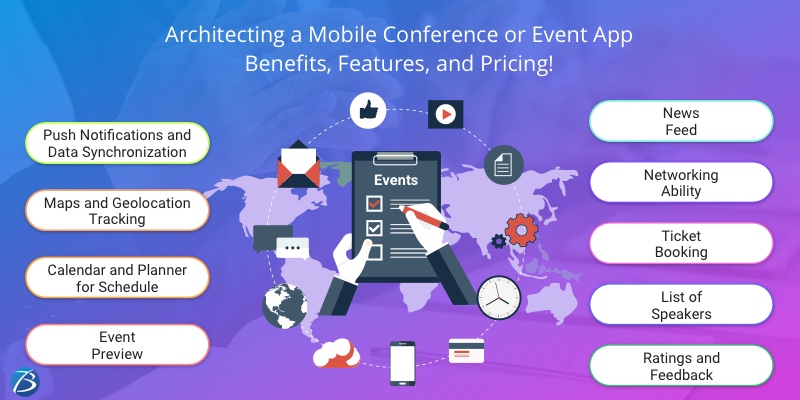
Push Notifications and Data Synchronization
Like other apps, push notifications are one of the most useful features available in the event apps too. These notifications help in informing the attendees of the event details well in advance and also remind them a day before the events. Besides, the data synchronization with the server, it enables informing the attendees regarding any modifications in the event program, time, schedule, location, etc. in real-time.
Maps and Geolocation Tracking
This feature helps the attendees to aptly reach the location of the event.
Besides marking the event location in the integrated map, you can also do the following:
  • Employ live directions for assisting the participants in real-time.
  • In case the event is held over a larger area, build an inner map in the event app with different points of interest.
  • Also, try making the geo-location feature work offline for the attendees to use the app navigation even during unstable network connections.
Calendar and Planner for Schedule
It is of utmost importance to display the details of the event program in the calendar and add them to the schedule. This feature is immensely important for users to remain informed of the event. Also, the planner i.e. customizable notification system will ensure that the users won’t miss any program.
Event Preview
Several people will decide on whether or not to attend the event based on the final preview of the event. So, the event preview should include some interesting content that resonates with the target audience and allures them to participate.
News Feed
The basic purpose of every mobile event or conference app is to inform and entertain its audience and ‘News Feed’ can help to do this well. It also helps to keep the users of the app updated with the latest news or modifications about the events or other important announcements. Besides, this feature enables the organizers to share event photos, videos, interviews, ads, etc. for keeping the users excited about the event.
Networking Ability
Most of the time, the attendees are looking for developing networks through an event, especially corporate events. Rather, networking and building contacts are some of the major reasons why professionals attend events. So, the app must allow the attendees to freely connect, chat and share content with others. At the same time, make sure that spam or unnecessary sales pitches are avoided.
Ticket Booking
This is a powerful feature that can be used for better event planning for participants and monetization purposes as well. The in-built ticket booking feature of the event app saves the participants from the efforts like finding tickets from other sites or offline locations, printing tickets, payments, etc. All this can be done easily through the app.
List of Speakers
For a mobile conference app, it is a must to add a list of speakers, especially when the events are corporate and could include open-air lectures or so. Technically speaking, integrating this feature is not much difficult. A single-screen needs to be added that has the speakers’ details, photo elements, text, social media links, etc.
Ratings and Feedback
Reviews, ratings, and real-time feedback by the attendees are essential for every budding event planner or event app owner. It helps to get insights for improvement of the app as well as particular events that were organized using the app. By using this feature, the participants can chat in real-time with the speakers or experts in the events and rate them too.

Event App Development Cost Considerations

Architecting an impactful event app is no easy task. It depends on a plethora of factors like types and numbers of features to be integrated into the app, location of the development firm, experience of event app developers, app platform, API integrations, app security measures, UI/UX design, devices that the app supports, usage of smartphone hardware, support and maintenance requirements, and much more.
However, here are a few aspects based on which you will be able to get a rough idea about the event app development pricing.
  • Companies offering Event app development services can take 8-10 weeks for creating a good event management app.
  • The hourly rate of developers can range from $20 to $50 or more, depending on the location and reputation of the offshore software company.
  • A simple event app can cost anywhere from $20,000 to $40,000. An app with medium complexity can cost from $40,000 to $60,000 and a full-fledged app with complex features can cost $ 60,000 and above.
  • Additional costs can be incurred for features that are related to attendee engagement, brand awareness, etc.
But every project has individual specifications and requirements. So, if you want to get an exact estimate for your mobile conference app project, get in touch with Biz4Solutions, we will provide you the estimates within 48 hrs.

Final Thoughts

Mobile technologies have advanced to their best capacity and have disrupted the event management industry in myriad ways. Mobile event apps or conference apps have become a must-have for modern-day event professionals. But without the right set of engaging features, these apps cannot provide better attendee engagement, real-time insights of events, and thus, increased business. So, in this blog, we have made an effort to list down those features, with event app benefits and also explained the event app development cost considerations.
Hope this blog helps in making important decisions in your event planning app development journey.
For any further assistance on this topic, comment below or drop us a mail.
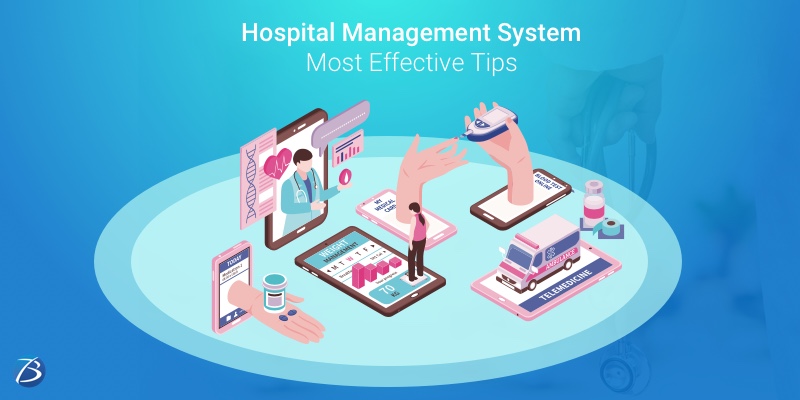

Handy Tips on Choosing the most Effective Hospital Management System (HMS)!

Handy Tips on Choosing the most Effective Hospital Management System (HMS)!
Hospital Management System
Present-day patients expect services like receiving reminders via email/text messages, accessing their electronic health records whenever needed, and availing of online video doctor consultations from their medical consultants and physicians. Practitioners too, prefer advanced and smart Healthcare management software solutions for easing out their workload. Therefore, it has become necessary for hospital bodies to revamp their traditional infrastructure and implement a technology-infused approach. And, what can be a better option than employing a comprehensive HMS (Hospital Management System)?
A digitally smart HMS has been garnering popularity in the healthcare industry for the last few years. However, for receiving optimum benefits, it’s crucial to employ the right HMS that perfectly aligns with the requirements of your medical facility. So, while selecting the vendor agency that offers Healthcare Development Services, there are certain factors to consider and some standard practices to follow. My write-up provides all-inclusive guidance on how to pick the right HMS (Hospital Management System) for your healthcare facility. But, before we delve deeper, let me provide you useful pieces of information on HMS and its benefits.

Hospital Management System: Overview

A Hospital Management System, commonly known as HMS, refers to an app or a software system that is employed for gathering and digitally storing patient data and keeping the diverse departments of a healthcare facility connected on a common platform. An HMS offers several modules like Patient management system software, Doctor Management System, Online Appointment Management System, Lab Test System, Invoice Management System, Administrative Rights Management System, Drug Management System, etc.
An HMS executes the following functions.
  • Assists in tracking, planning, and carrying out daily activities in a healthcare organization
  • Minimizes management burdens through automation of processes and the availability of information to all stakeholders
  • Manages the entire lifecycle of patients’ treatment starting from their hospital admission till their discharge.
  • Records medical data, stores medical reports, generates e-prescriptions, processes bills, maintains patients’ contact details, tracks appointment schedules, saves insurance information for future reference, etc.

Hospital Management System: Benefits

Take a look at the key benefits ushered in by an HMS.
  • Provides easy access to patients’ healthcare data as well as the accurate medical history of patients
  • Minimizes chances of errors and enhances the efficiency of medical practices resulting in improved patient care
  • Ensures security of sensitive data and retrieval of data whenever required
  • Saves time and turns out to be cost-efficient
  • Reduces the documentation workload
  • Exercises better audit control and compliance to healthcare policies
  • Ensures better revenue management and accountability for hospital bodies

Picking the Right HMS (Hospital Management System): Best Practices

Healthcare app Development Company
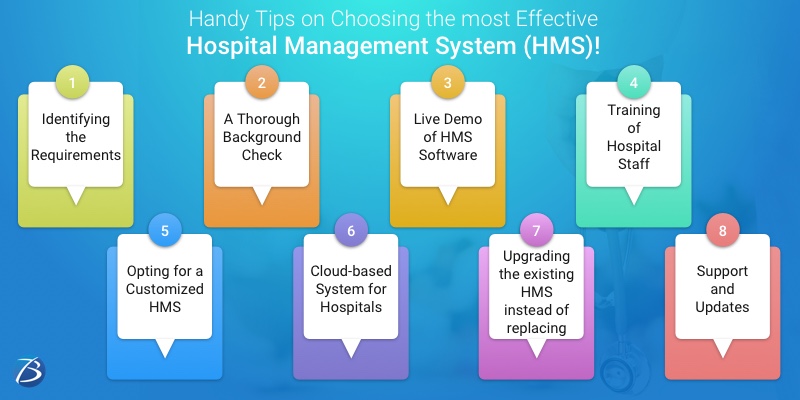
Identifying the Requirements
It is crucial to identify the specific requirements based on the workflow of your healthcare facility before you proceed to select an HMS for your hospital. This can be done by holding discussions with your hospital management staff and other stakeholders on the necessary functionalities as well as additional features needed by your organization. These brainstorming sessions will not only assist you to pick the best suited HMS; but also provide you a clear understanding needed for comparing and analyzing the pros and cons of different HMS products.
A Thorough Background Check
Before selecting an HMS it is important to conduct a thorough background check of various HMS available in the market as well as the recognition and previous work experience of the vendor agency. For this, you need to check online ratings and reviews and feedback from the company’s existing/previous customers.
Live Demo of HMS Software
Before finalizing the HMS for your medical organization, your vendor must present a demo of the HMS features. Such a demo will not only enable you to validate the specifications from the products but also determine if that HMS will prove useful and reliable for your patients and organization. Prior to the demo, prepare a report containing your concerns and pain points and keep this report handy during the demo. This strategy will help you comprehend during the demo how usable the HMS will be for your facility and what problems will it address.
HMS Implementation: Standard Practices
The effective implementation of HMS involves processes like establishing the basic setup, training of staff, and pilot testing. The conventional approach of implementation includes commencing with a modest beginning and then implement an enhanced automation prospecting. On the other hand, the phased approach of HMS implementation empowers the hospital management to reduce the workload of hospital operations bit by bit.
Training of Hospital Staff
Improper knowledge and understanding of the HMS by the hospital staff may result in disastrous outcomes. Therefore, train your staff well for educating them about its functioning and maintaining the privacy and security of medical data. The training session may include fundamental setup and pilot testing and can be customized for various departments as per their needs.
Opting for a Customized HMS
Even if you have finalized HMS software after careful scrutiny of requirements and features, you’re likely to miss out on certain indispensable functionalities. Moreover, you might need to implement advanced features down the line to cope up with changing times. Such issues can be resolved if you opt for a customized HMS. Customization happens to be a crucial prerequisite when automating your hospital functions. As such, it is advisable to pick a vendor who will craft customized HMS software tailored to meet the needs of your hospital’s workflow and allow you to add advanced functionalities as and when required.
Cloud-based System for Hospitals
When installing an HMS solution for your medical facility, you need to decide on its location – whether a client-server or a cloud-based system. Also, it’s advisable to go for cloud-based HIS software. The reasons are as follows:
  • It can be effortlessly be scaled and will help you to accommodate the growth of your organization in the coming years.
  • This system provides remote access via a browser and hence is accessible from any location.
  • Furthermore, this model turns out to be a cost-efficient solution as it involves paying monthly charges and rules out the need for investing in resources and managing them.
However, while finalizing the HIS/HIMS software, do not forget to validate its scaling abilities.
Upgrading the existing HMS instead of replacing
‘Your hospital already possesses an HMS, but needs to be enhanced as per the latest practices!’ Well, in this case, there isn’t any need for reinventing the wheel by replacing the existing software. Instead of investing in new software, look out for vendor firms who will upgrade your existing HMS as per your need and integrate the additional features in the old version itself.
Support and Updates
Your hospital’s HMS software is subject to real-time scenarios as well as the loads which mandate the reputation of your workforce post-implementation of the HMS. Several spontaneous and unanticipated issues are likely to crop up. Such issues need correct handling within the right SLA (service level agreement). Additionally, HMS systems need auto updations from time to time. Hence, select a vendor who provides the facilities of updations and support.

Key Takeaways:

Times are changing and so are the expectations of patients, doctors, and also the hospital staff! Ever since the HMS solutions have transformed the functioning of the healthcare sector, the doctor-patient community prefers the digitally functioning hospital set-up over the traditional one. So, it’s high time to adopt a highly functional HMS that fulfills the needs of your hospital body.
Looking for reliable healthcare app development services to craft a customized HMS for your healthcare body? Contact us!