
How Intelligent Healthcare Management Systems Are A Boon to Clinics and Hospitals?
As smartphone technology gets infinitely smarter over time, healthcare apps are becoming equally smart, multi-functional and user-friendly. Until 2017, there were over 325,000 recorded healthcare mobile apps in the top app stores around the world with Android topping the list (source: research2guidance). The major driving forces behind this exponential increase is the ever-inflating adoption of smartphones, coupled with heavy investment in the digital health market which fuels healthcare mobile app development.
Many medical facilities are adopting innovations in healthcare mobility solutions in order to be compliant with various healthcare regulations and standards like HIPAA, ACA, etc. Some of them are adopting the digital trends to provide quality healthcare to their patients. With the growing healthcare needs of people across the globe, not only physically but also remotely (through smartphones), healthcare mobility solutions for doctors and practices can be a blessing.
Medical healthcare professionals could face an abundance of challenges if they choose not to adopt digitalization/healthcare mobility solutions such as:
- Haphazard appointment management and scheduling systems
- Suboptimal experience for patients while dealing with the availability of physicians
- Shoddy invoicing and payment processing consuming a large amount of time
- Medical records and history are scattered across places, and there is no centralized medical history for each individual at one place
- Patients are unable to trust the healthcare professionals due to lack of proper communication and information
To counter the above challenges, hospitals and healthcare professionals should go for Healthcare Management Systems. These systems are designed to provide a solution to manage the practice and processes pertaining to hospitals thereby improving the quality of patient care. It improves the overall operational efficiency of hospital staff. There is effective exchange of information between hospital/physicians and patients, thus improving communication between facility and patients.
Use Case
Consider the scenario, where a patient wishes to book an appointment with an orthopaedic doctor. With the absence of healthcare mobile apps, a patient would be confronted with the harrowing experience of visiting a clinic for an appointment, which leaches on valuable time. Now, with the advancements in digital technology, we can book the appointments through the mobile app itself in the comfort of our very homes.
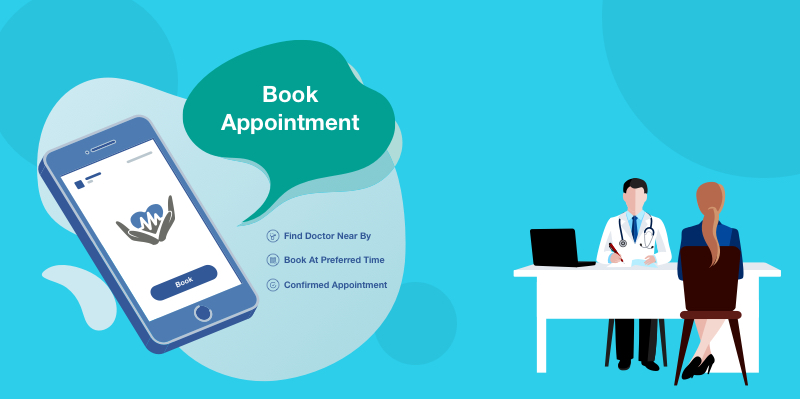
This is just one of the arrays of features that Healthcare Management Systems can provide. There is a plethora of other features available in a Healthcare Management System, which we will look into further.
Healthcare Management System
The features of an efficient Healthcare Management System are manifold and doctors can use them in an abundance of situations as below:
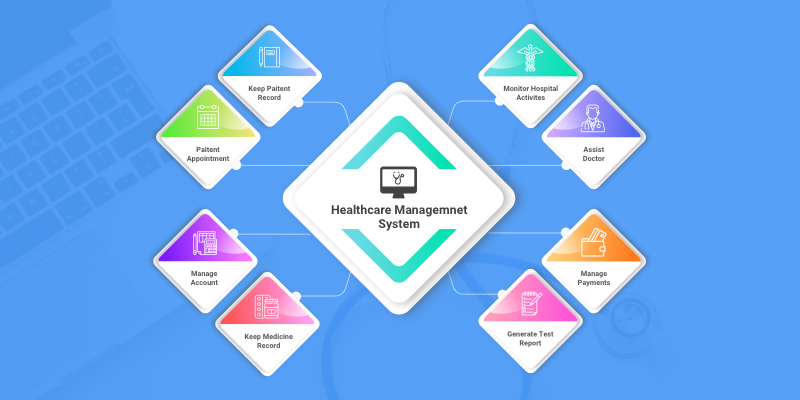
Centralized patient history
- You will be able to gain access to Electronic Health Records (EHRs) and Electronic Medical Records (EMRs). You can bid farewell to the out-dated paper records and step into the digital age.
- It can segregate past procedure information which is done at local clinics and medical history, both of which are kept separate from each other.
- It is designed in an efficient manner which mandates for medical information to be input only once. After that, this data is stored in a centralized server which can be accessed easily.
Efficiently managed appointments
- Your patients will be able to schedule appointments online in accordance with the slots provided by you. They can also cancel and reschedule the appointments. An HMS also acts as a calendar for doctors where the schedule can be checked and managed, if needed. Timely reminders are another advantage of this system.
- It can provide Electronic Medical Records (EMRs) clubbed with Patient Scheduler that is customized based on practice needs.
Dedicated interaction between patient and physician
- It provides patient-doctor communication feature which acts as an instant messaging tool between the two parties. It avoids the middleman and provides healthcare, even in the most remote areas.
Hospital and pharmacy management solutions
- These solutions for hospitals eliminate errors due to manual involvement, tracks pharmacy inventory online thereby avoiding pilferage of medications. It has better control over the inventory thereby improving profit margins. It promotes efficient workflow processes as well.
E-prescriptions
- Ability for the physicians to e-prescribe a prescription to a patient thereby eliminating prescription drug errors. It also speeds up the medical settlement process.
Chronic care management
- This solution facilitates physicians to share the care plan with patients. Patients can key in their exact health status daily. Clinical staff gets access to real-time data along with remote monitoring of vitals.
Reminder feature for patients
- Reminds the patients to take care of their illnesses by notifying to consume medicines at right times.
Are You Interested in Building a Top-Class Website or Mobile App?
Final Verdict
Healthcare consumers are continually showing increased usage of digital technology, with numbers exponentially rising with every passing year. Market for healthcare mobile app development is growing at an enormous speed. Research shows that this market will reach $26 billion by 2017 (source: research2guidance). Healthcare mobile apps and healthcare mobility solutions are being increasingly sought out by doctors and consumers alike.
Author Bio
Manisha Bathia is a Project Manager at Biz4Solutions with 14+ years of experience in Project Management, Quality Assurance and Test Management in IT-related services. She has expertise in various domains like Healthcare, Finance, Water technologies, Transportation, Telecom, etc. She has experience in defining and implementing quality management strategies to ensure exceptional delivery of software projects.
Social media profile link – https://www.linkedin.com/in/manisha-bathia-10285116/
How Digitalization Boosts the Patient Experience
“The good physician treats the disease; the great physician treats the patient who has the disease. – William Osler, a famous Canadian physician” How true these lines are! It is so necessary to think beyond the clinical needs of the patients.
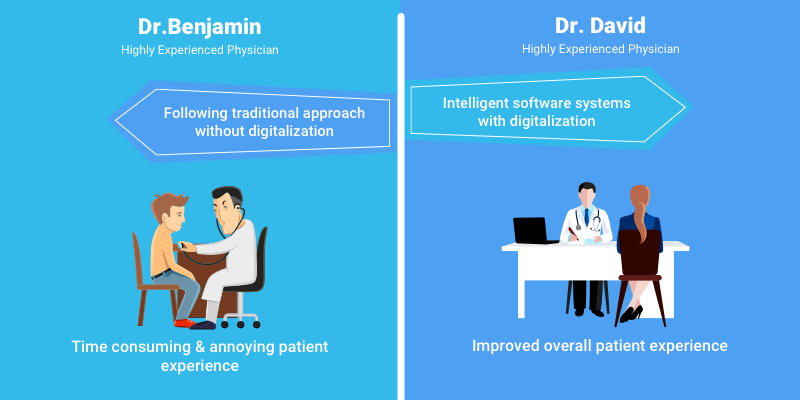
It’s all about how the patients are treated and made to feel. Let’s consider a hypothetical scenario. There are two highly experienced and popular doctors in the city, Mr. David and Mr. Benjamin. Recently, Mr. David has started incorporating some intelligent software systems in healthcare that use digitalization to improve the overall patient experience. To ensure that patients don’t wait in the long queues, Mr. David has started using a patient scheduler mHealth app. For saving their medical records, bills, etc., Mr. David has incorporated a digital system, so that even if patients forget or misplace their documents, all the records will remain intact. However, Mr. Benjamin is still following the same traditional methods to approach and treat the patients.
What do you think? Whom will the patients prefer over time?
Technology is making a massive difference in the healthcare industry. Automation, healthcare IoT and other technological advances are greatly improving the medical practices and ultimately the patient experience.
What Factors Enhance the Patient Experience in Hospitals?
Along with in-hospital experience, patients are also influenced by pre and post-treatment experience. Technology can be used to engage the patients by providing them proactive information and guidance about their health conditions or appointments with doctors through dedicated medical apps. There are mobile apps that make it easier for patients to approach the facilities of the hospital. Likewise, to get feedback about what makes them satisfied, it is necessary to talk to them and also conduct surveys to get better information.
Today, advanced technology is playing a crucial role in enhancing the patient experience. Using digital transformation and IoT in healthcare can help to organize the patients as well as the hospital staff. A mobile app that is designed for scheduling doctor appointments enables the patients to do it sitting at their homes in their available time zones. Digitally managed clinic staff schedule software improves the communication between staff and enables them to handle more tasks without any hassle. Electronic medical records or EMRs are helpful in saving digital versions of different medical papers, charts, etc. related to patients.
When hospitals and clinics incorporate such tools and technologies, it certainly improves the quality and efficiency of care. However, the safety and security of the data is an important factor in healthcare. So, healthcare apps need to be HIPAA compliant. The data like personal information of patients (like their names, contact details, etc.) and other medical information in the hospitals must be protected. This can be assured when the apps are HIPAA compliant.
How Digital Technology Influences Patient Experience?
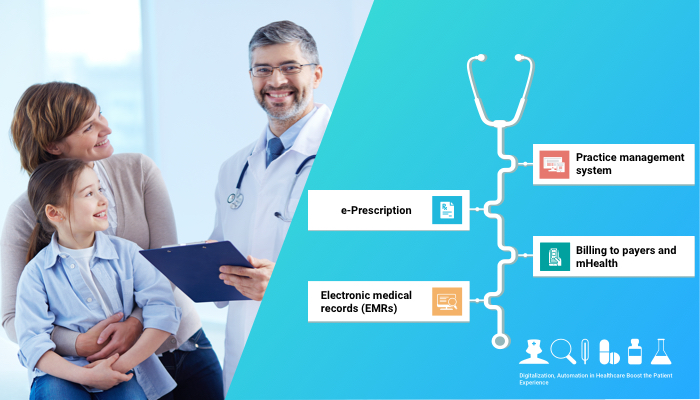
Digital technology is a key enabler of a successful patient journey. Many hospitals have already started using certain tools, software, apps, etc. for enhancement of overall patient experience; a few of them are specified here.
Electronic Medical Records (EMRs)
EMRs have been playing an important role in improving the healthcare industry. EMR is a tool that digitalizes patient records and keeps track of the vital information related to patients. These files and records can be accessed and used by concerned doctors to provide the care quickly and accurately. EMRs increase efficiency and they reduce documentation errors. The doctors and other staff don’t need to spend time in searching records in files, as the information is available at the click of fingertips through EMRs.
Practice Management System in Healthcare
Practice management system in healthcare (or PMS) is software that deals with several day-to-day tasks of clinics and hospitals. PMS helps to automate some tasks like paying and tracking bills, documenting clinical tasks, maintaining a list of insurance payers, measuring practice performance of doctors, etc. It can also be used in automating the tasks at multiple branches of a hospital. Practice management system in healthcare helps to streamline many time-consuming tasks which ultimately increases productivity and provides better ROI.
A good example of PMS is an emergency physician scheduler mobile app. Such an app connects the patients to doctors within minutes in case of emergency and their lives can be saved. At other times, the doctors can guide the patients to take precautions to avoid any bad health conditions.
Investment in a PMS will always be a cost-effective decision as it helps to manage multiple tasks of the staff members. Wearable technology, monitoring equipment, etc. embedded with IoT in healthcare play a vital role in tracking patient health. The reports of their health are automatically saved and reminders are sent to the concerned departments. When PMS is integrated with EMR, scheduling different tasks, billing, etc. becomes much faster and easier.
Billing to Payers and mHealth
When patients have any insurers or third-party payers involved while paying the hospital bills, billing to payers and mHealth (mobile health) facility automates some tasks. Depending on the insurance policy, that the patient has a tie-up with, a particular billing amount is automatically deducted and the patients can instantly pay the remaining amount. mHealth is also useful in guiding and educating the patients, giving reminders of appointments, taking feedbacks from them, providing remote care to them, etc. It is necessary to develop mHealth apps that are HIPAA compliant for the protection of all the medical data. HIPAA compliant apps build trust in patients.
Home Healthcare and e-Prescription
Home healthcare includes various services like monitoring health status, assisting in daily activities, medical tests, wound care, etc. which are provided to patients in their homes. An example of a home healthcare app is Phlex65. The senior citizens may find it difficult to get professional caregivers instantly in case of an emergency. Phlex65 connects them with caregivers in real-time whenever necessary. Caregivers can guide them in daily activities like personal care grooming, assisting in the transfer, taking medicines on time, cooking, assistance with bathing, light housekeeping, etc. The caregivers can also take them to doctors in case of emergency.
In case of emergency, when patients cannot visit a hospital, the doctors can instantly send e–Prescription to them for time being a relief. It is directly sent to the pharmacies through dedicated software. Instead of waiting for handwritten prescriptions, the electronic prescriptions also help to avoid the errors which sometimes result in the selection of incorrect medicine or dosage and omission of certain information.
As a preventive measure, people can use wearable devices like heart rate and blood pressure monitoring cuffs, glucometer, etc. to check their fitness levels, track heartbeats, monitor glucose levels, etc. Whenever the levels are below or above the normal limits, these wearable devices send the data to patients and make them aware of it. The patients can immediately take e-Prescription from the doctors and consume preventive medicines. IoT plays a crucial role here as devices are connected to software systems to provide accurate health information.
Are You Interested in Building a Top-Class Website or Mobile App?
Conclusion
Profits of a hospital are directly proportional to the satisfaction of patients. So, it has become crucial for hospitals to be proactive and incorporate advanced technology. To survive in the cut-throat competition, hospitals have to take steps to deliver special care experience to their patients. Digital technologies like EMRs, PMS, patient scheduler apps, e-Prescription, mHealth, etc. are transforming the healthcare industry at a fast pace. They give more power to the patients to choose the best for them in their convenience. These are more efficient and save a lot of time of both- the patients and hospital staff.
Ultimately, the hospitals delivering the best patient experience using digital tools will be the ones who excel and profit.